Municipal WWTP
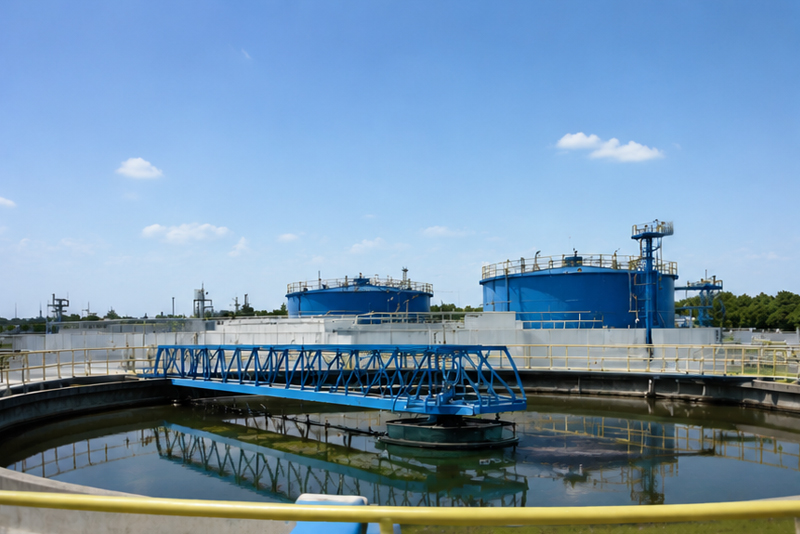
Municipal Wastewater Treatment Plant (WWTP) Solution
Product Value Overview
We provide a large-scale, reliable, and regulation-compliant municipal wastewater treatment system designed for cities, towns, and public utilities, where long-term stability, environmental compliance, and lifecycle efficiency are critical.
Our solution is built to support urban infrastructure development and public environmental protection, ensuring consistent wastewater treatment performance under varying population loads and seasonal flow changes.
What this system is designed for
Municipal wastewater treatment projects typically face:
Large and continuously changing inflow volumes (population + seasonal variation)
Strict discharge standards regulated by environmental authorities (EU / EPA / local agencies)
Aging or overloaded existing treatment infrastructure
High requirement for long-term operational stability (20+ years design lifecycle)
Budget sensitivity balanced with lifecycle cost efficiency
Need for centralized treatment across residential, commercial, and public zones
Our system integrates:
Sewage Lifting Stations for municipal pipeline network collection and transport
Oil-Water Separation for preliminary removal of floatable oils and debris
DAF Systems for primary clarification and suspended solids removal
Integrated Wastewater Treatment Systems for biological treatment and nutrient removal
Modular expansion units for phased capacity upgrades in growing cities
Centralized control systems for real-time monitoring and operational management
Core Value for Municipal Authorities & Utilities
1. Long-Term Infrastructure Stability
Designed for continuous operation over decades, ensuring reliable treatment performance with minimal system failure risk.
2. Full Compliance with Environmental Regulations
Supports strict discharge standards for urban wastewater, rivers, lakes, and coastal protection zones, reducing environmental penalties and ecological risks.
3. Scalable Urban Growth Adaptation
Modular system architecture allows cities to expand capacity in phases without rebuilding the entire plant.
4. Optimized Lifecycle Cost (LCC)
Focuses not only on initial investment, but also on energy efficiency, maintenance reduction, and long-term operational cost control.
5. Centralized Smart Operation
Enables unified monitoring and control of multiple treatment stages, improving operational efficiency and decision-making for utility operators.